

Impacted Tooth

Impacted Tooth Treatment
Impacted tooth are a common dental problem that can lead to discomfort and oral complications. They occur when a tooth fails to emerge fully through the gum line due to blockage, improper angle, or insufficient space in the jaw. Among all teeth, wisdom teeth are the most frequently impacted.
While some impacted teeth may remain asymptomatic, others can trigger pain, swelling, or infection. Regular dental checkups are essential for early detection, preventing potential complications. Understanding the causes, symptoms, and treatment options is key to maintaining oral health.
Proper management of impacted teeth can prevent long-term dental issues such as decay, crowding, or gum disease. Depending on the severity, treatments range from monitoring to orthodontic correction or surgical extraction.Early intervention ensures faster recovery and reduces the risk of future dental complications, while timely consultation with a dental professional helps protect overall oral function. Maintaining good oral hygiene and regular dental visits further supports the prevention and management of impacted tooth problems.

What is Tooth Impaction?
Tooth impaction occurs when a tooth cannot emerge fully into the mouth. This may happen due to several factors:
- Lack of space in the jaw
- Obstruction by surrounding teeth
- Thick overlying gum or bone tissue
- Genetic or hereditary factors
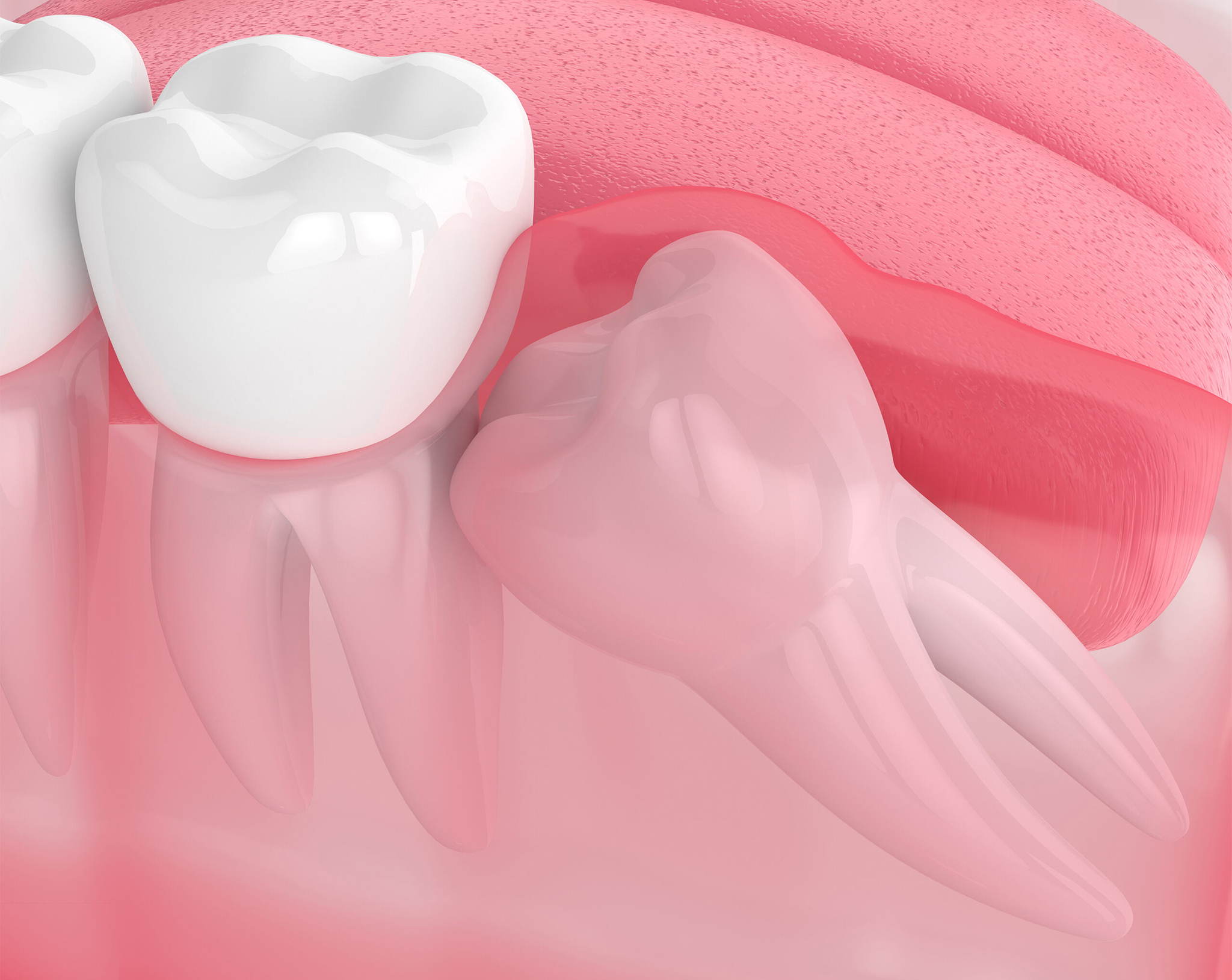
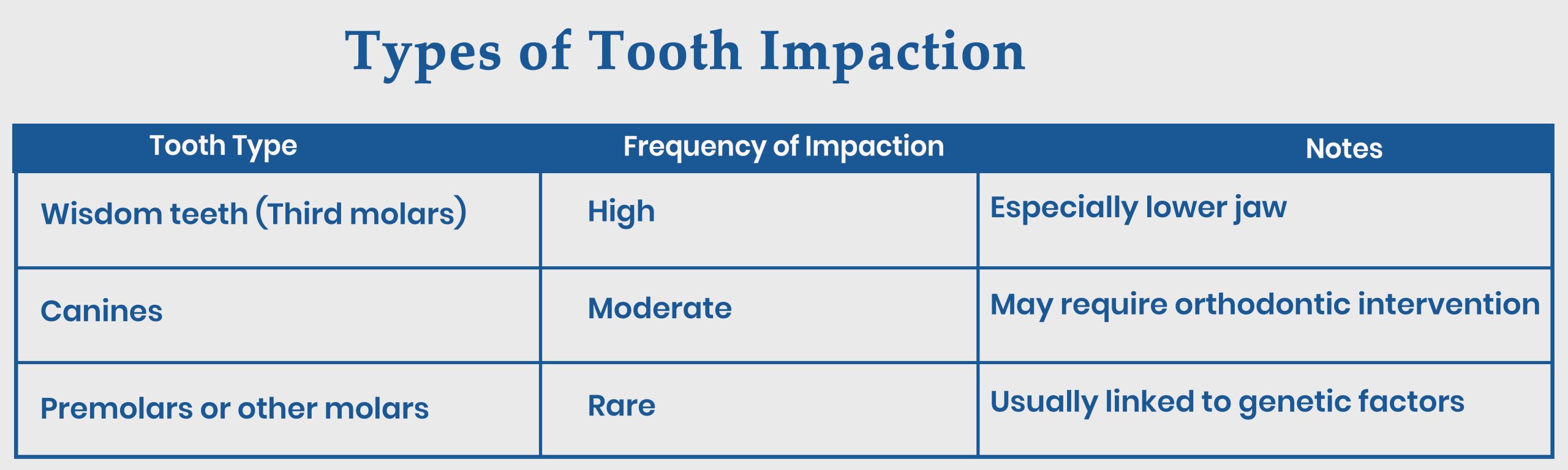
Impacted teeth can remain trapped under the gums for life if untreated. The third molars, commonly known as wisdom teeth, are most frequently impacted, especially in the lower jaw. Other teeth like canines can also experience impaction, although less commonly.
Impaction may lead to dental issues such as pericoronitis, where trapped debris causes infection, gum irritation, and foul odor. Additionally, an impacted tooth pressing on adjacent teeth can cause crowding or damage over time.
Symptoms of Impacted Teeth
The presence of impacted teeth may be noticeable through several signs, including:
- Regular headaches or jaw pain
- Difficulty opening the mouth
- Redness, swelling, or sensitivity near the impacted tooth
- Persistent bad breath or foul taste
- Pain while eating or biting down
Symptoms vary depending on the severity of impaction and the type of tooth affected. Early detection can prevent further complications, so dental X-rays are often recommended to identify hidden impacted teeth.
Causes of Tooth Impaction
The main factors contributing to tooth impaction include:
1. Insufficient Space in the Jaw
A narrow jaw or overcrowding prevents teeth, especially wisdom teeth, from erupting fully.
2. Overlying Gum or Bone Tissue
Sometimes thick gum tissue or bone blocks the tooth from emerging properly.
3. Tooth Angulation or Eruption Path Abnormalities
Teeth may grow at incorrect angles, pressing against neighboring teeth or bone.
4. Hereditary Factors
Jaw size, tooth size, and eruption patterns can run in families, increasing the risk of impaction.
Treatment Options
Treatment depends on the tooth’s location, severity, and associated complications:
- Monitoring: Mild cases may require regular observation.
- Orthodontic Intervention: Helps realign mildly impacted teeth.
- Surgical Extraction: Common for severely impacted wisdom teeth.
Surgical procedure notes:
- Sometimes a simple extraction suffices, but some cases require removal of gum or bone tissue.
- Post-extraction care is critical for reducing swelling, bleeding, and infection risk.
Post-Treatment Care Instructions
Proper care after tooth extraction ensures faster healing:
- Bite the gauze firmly for 30–45 minutes to control bleeding.
- Avoid gargling, spitting, smoking, and hot foods for 24 hours.
- Eat soft foods and avoid drinking with the help of straws.
- Take prescribed medications and avoid alcohol with antibiotics.
- Apply cold compresses for the first day, then switch to warm compresses after 48 hours.
After 24 hours:
- Gently rinse 3–4 times a day with warm saline water.
- Brush carefully, avoiding the extraction site.
Stay hydrated and avoid fizzy drinks or alcohol.
Complications of Impacted Teeth
Untreated impacted teeth can lead to:
- Infection and gum disease (pericoronitis)
- Tooth decay, especially in partially erupted teeth
- Crowding of neighboring teeth
- Cysts damaging jawbone or adjacent teeth
- Absorption or damage to nearby teeth
Early detection and treatment are essential to prevent these issues.
Prevention
Although tooth impaction cannot always be prevented, the following steps can help reduce complications:
- Routine dental checkups every six months
- Dental X-rays to monitor wisdom teeth development
- Maintaining good oral hygiene to reduce infection risk
When to Contact a Dentist?
Seek professional care if you notice:
- Persistent bleeding beyond 24 hours
- Severe pain after 2–3 days (possible dry socket)
- Swelling that worsens after 3 days
- Fever, foul taste, or odor from the extraction site
- Difficulty swallowing or opening the mouth