

Penile Lengthening Surgery

Penile Lengthening Surgery: Safe Treatment Options for Increased Size
Penile lengthening surgery aims to increase the visible length of the penis and improve patient confidence. It is usually considered after conservative options have been discussed and when realistic expectations are set. The procedure may improve the flaccid length and the appearance of size but has limits regarding erect length.
Not all men are suitable candidates; evaluation includes medical history, sexual function assessment, and expectation counseling. Many techniques exist, each with benefits and trade-offs related to function, sensation, and scarring. Choosing a qualified surgeon and understanding realistic outcomes are essential steps before deciding on surgery.
Because this is elective surgery, thorough informed consent and psychological readiness are part of preoperative care. Patients should be aware that complications and the need for revision are possible. A shared decision-making approach between the patient and surgeon leads to better satisfaction.
Overview of Penile Lengthening Procedures
Penile lengthening procedures broadly fall into two groups: soft-tissue/ligament techniques and complex reconstructive (phalloplasty) approaches. Ligament release (suspensory ligament division) increases the visible flaccid length by allowing more shaft to descend outside the pubic shadow. Reconstructive approaches may involve grafting, skin flaps, or staged surgeries for more significant gains.
Some surgeons combine suspensory ligament release with controlled fat removal from the pubic area (liposuction) to maximize visible length. Other adjuncts include dermal or synthetic grafts to maintain stability and counteract retraction. Notably, techniques that increase girth do not necessarily lengthen the erect penis and vice versa.
Surgical goals are aesthetic improvement and patient satisfaction while preserving erectile function and sensation. Because results vary, careful preoperative counseling about measurable gains and limitations is essential. Follow-up and possible additional procedures may be necessary.
Indications for Surgery
Penile lengthening is typically considered for men with significant functional impairment after trauma or surgery, or for those with marked anatomical concerns affecting sexual function. Many men seek surgery for cosmetic reasons due to perceived smallness despite normal measurements. Psychological distress related to body image can also motivate patients to seek treatment.
Common indications include:
- Functional shortening after penile trauma or prior surgery.
- Congenital or post-circumcision anatomical issues causing tethering.
- Persistent distress about penile size despite normal clinical findings.
- Post-weight-loss or pubic fat pad burying the penis (requiring debulking and suspension adjustments).
Not all cosmetic concerns are appropriate for surgery; active psychiatric illness or body dysmorphic disorder should be managed first. A multidisciplinary assessment with urology and, when needed, mental health support improves candidacy selection.
Surgical Techniques (Key Methods)
Suspensory ligament release is the most widely known technique; the surgeon divides the ligament that anchors the penis to the pubic bone, allowing increased external shaft length. To reduce retraction and maintain gains, surgeons often place soft-tissue advancement or grafts and recommend postoperative traction or stretch protocols. Grafting techniques use autologous tissue (fat, fascia) or dermal grafts to add length or stabilize the shaft.
For larger reconstructions, staged phalloplasty or flap-based surgeries borrowed from reconstructive plastics can lengthen and augment the penis significantly but are more complex. These advanced procedures may be used in severe deformity, gender-affirming care, or complex trauma cases. They require specialized teams and carry higher risks and longer recovery.
Some centers combine liposuction of the pubic pad, suspensory release, and scar revision to optimize the visible length without altering erectile tissue. Each method has distinct pros and cons for erection quality, sensation, scarring, and need for revision. Discuss technique-specific trade-offs with your surgeon.
Procedure (What to Expect in Surgery)
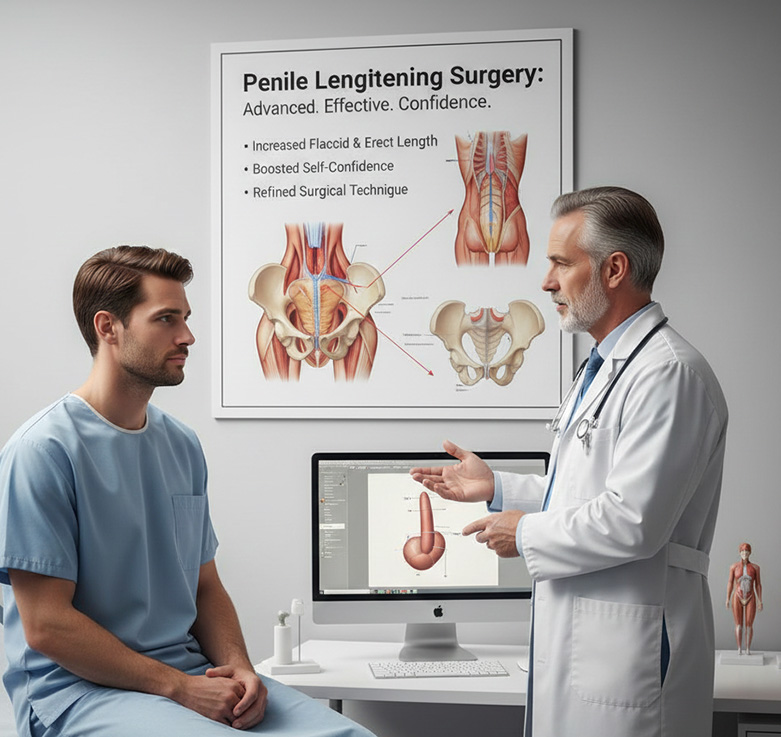
Most lengthening procedures are performed under regional or general anesthesia in an operating theatre with sterile technique. The surgeon makes a small incision at the penile base, mobilizes the suspensory structures, and releases tethering attachments as indicated. If grafting or liposuction is planned, these steps are performed during the same operation to improve cosmetic outcome.
Some procedures include fixation sutures or internal grafts to limit retraction and stabilize the shaft long term. The incision is closed carefully to minimize scarring and a dressing is applied; drains are rarely required but used when needed. Operative time varies by complexity but commonly ranges from one to several hours.
Prior to discharge, surgeons review activity limits, wound care, and signs of complications. Patients receive instructions on pain control, antibiotics if indicated, and when to resume follow-up and traction protocols when prescribed.
Expected Results & Limitations
Patients can often expect modest gains in flaccid visible length after suspensory ligament release, typically measured in centimeters rather than dramatic increases. Erect length gains are less predictable and often minimal because surgery does not change the corporal bodies’ anatomical length. Cosmetic improvement and patient satisfaction relate closely to preoperative counseling and realistic expectations.
Limitations include potential retraction over time, scar contracture, and variability in individual healing that may reduce long-term gains. Some men experience improved self-confidence even with small objective changes, while others may remain dissatisfied if expectations were unrealistic. Long-term follow-up studies show mixed durability; revision rates vary by technique and surgeon experience.
Adjunct measures such as post-op traction therapy or fat pad reduction often enhance perceived results. Discuss measurable goals and acceptable outcomes with your surgeon before proceeding.
Risks, Complications & Success Rates
Risks include infection, wound breakdown, scarring, loss of sensitivity, deformity, erectile dysfunction, and dissatisfaction with cosmetic results. Infection or device/graft-related problems may require further operations or graft removal. Some procedures have notable rates of reoperation due to unsatisfactory length gain or complications.
Success in terms of patient satisfaction is highest when careful screening, realistic counseling, and experienced surgeons are involved. Objective success rates (measured length gains) and complication frequencies vary widely between centers and techniques. Protecting erectile tissue and neurovascular bundles is critical to preserving sexual function.
Make sure your surgeon explains typical complication rates, their management plan, and what revisions would involve. Choosing a center with transparent outcomes and low complication history reduces risk.
Recovery & Aftercare
Immediate recovery includes wound care, pain control, and restricting strenuous activity for several weeks. Most men can return to light activities in a few days but should avoid sexual activity and heavy lifting until cleared, commonly after 4-8 weeks depending on the procedure. Use of compression dressings or a supportive garment is often recommended to reduce swelling and support healing.
Some surgeons prescribe a structured penile traction regimen during recovery to help maintain gains and minimize retraction. Follow-up visits monitor wound healing, infection signs, and any sensory changes. Long-term follow-up may include counseling on realistic sexual function and possible need for revision.
Adhering to postoperative instructions, antibiotic use when prescribed, smoking cessation, and chronic disease control-lowers complication risk and improves outcomes. Contact your surgical team promptly for fever, increasing pain, bleeding, or unusual discharge.
Choosing a Surgeon & Cost Considerations
Select a board-certified urologist or plastic/reconstructive surgeon with specific experience in penile lengthening and documented outcome data. Ask about their case volume, complication and revision rates, and before/after photos from consenting patients. Discuss anesthesia plans, facility accreditation, and postoperative support services.
Costs depend on the region, technique complexity, anesthesia, hospital fees, and whether graft materials or staged procedures are required. Many insurers do not cover purely cosmetic lengthening, so verify coverage and obtain detailed cost estimates and payment policy information before scheduling. Consider total cost of initial surgery plus potential revision procedures in your planning.
A transparent consent process, a clear aftercare plan, and accessible follow-up care are as important as surgical skill when choosing a provider. Seek second opinions if uncertain about recommended techniques.
Summary & Patient Advice
Penile lengthening surgery can offer aesthetic improvement and psychological benefit for selected patients but is not a guaranteed or risk-free solution for size concerns. Thorough evaluation, realistic expectations, and choosing an experienced surgeon are essential for the best outcomes. Consider psychological assessment if concerns about size significantly affect your mental health or relationships.
Optimize overall health control diabetes, stop smoking, and maintain a healthy weight before surgery to reduce complications and improve healing. If you decide to proceed, ensure a detailed written plan that covers expected gains, risks, recovery timeline, and revision policies. Long-term satisfaction depends on careful selection, skilled surgery, and realistic goals.