

Penile Hygiene

Penile Hygiene — Clean, Simple, Preventive
Penile hygiene means keeping the penis clean to prevent odor, irritation, and infection. Good hygiene supports sexual health, comfort, and confidence in daily life. This guide gives clear, practical steps and warning signs without medical jargon.
Most care is simple and done during daily bathing or showering with water and mild soap. Small changes in routine can prevent balanitis, smegma buildup, and unpleasant smells. If problems persist, a doctor can advise on specific treatments or tests.
Advice differs slightly for circumcised and uncircumcised men, so follow the section that applies to you. Gentle technique and consistency matter more than strong cleansers or harsh scrubbing. The goal is clean skin without damage or dryness.
Why Penile Hygiene Matters?
Keeping the penis clean reduces bacteria and yeast that cause infections and bad odor. For uncircumcised men, trapped smegma can irritate the glans and foreskin if not cleaned. For all men, poor hygiene may increase discomfort during sex and daily activities.
Good hygiene also helps partners feel safer and reduces the chance of transmitting infections. Many minor problems respond well to improved cleaning and simple home care. Early attention prevents small issues from becoming painful or requiring medical treatment.
Hygiene supports overall genital health alongside safe sex practices and regular medical checkups. It complements, but does not replace, protection like condoms or STI testing when needed. Make hygiene a normal part of daily self-care.
Daily Care & Step-by-Step Cleaning
Start each day or shower by rinsing the genital area with warm water to remove sweat and surface debris. Use a mild, fragrance-free soap only if needed, and avoid aggressive scrubbing that can dry or damage skin. Gently pat dry with a clean towel to avoid trapping moisture.
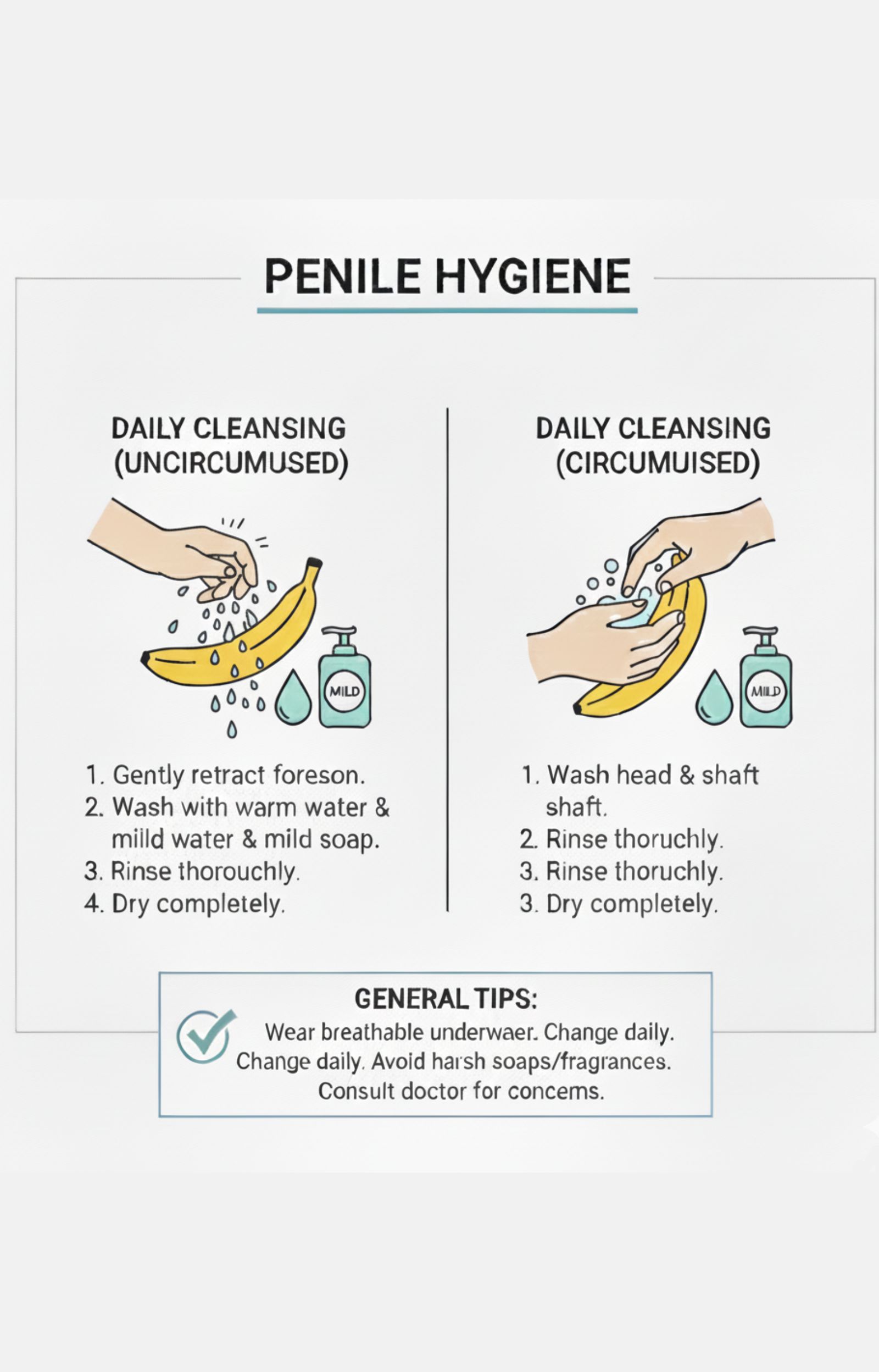
For uncircumcised men: gently retract the foreskin (if comfortable) and wash the glans and inner foreskin with warm water, then return the foreskin to its normal position.
For circumcised men: wash the shaft and glans area with water or mild soap, taking care around any sensitive skin.
Avoid strong antibacterial soaps, perfumed washes, or repeated douching, which can disrupt normal flora and cause irritation.Do this daily and after heavy sweating, swimming in public pools, or sexual activity. If you use lubricants, condoms, or creams, rinse them off after sex to keep the area clean. Routine is more important than frequency; once-daily gentle cleaning keeps problems away for most men.
Common Mistakes to Avoid
Using harsh soaps, body washes, or perfumed products can strip natural oils, leading to dryness or inflammation. Overzealous scrubbing or vigorous drying can create micro-tears that invite infection. Avoid applying random home remedies that may irritate sensitive genital skin.
Neglecting to clean under an intact foreskin is a frequent cause of smegma buildup and balanitis in uncircumcised men. Conversely, forcing retraction before the foreskin is mature or comfortable can cause pain and injury. Always use gentle methods and stop if you feel sharp pain or bleeding.
Assuming that one routine fits everyone is also a mistake; medical conditions like diabetes or eczema require adjusted care. If you have a health condition that affects skin or healing, check with your doctor about safer cleansing products. Personalize care for comfort and safety.
Signs That Need a Doctor
See a doctor if you notice persistent redness, swelling, or painful urination that does not improve in a few days. Foul-smelling discharge, bleeding, blisters, or ulcers are red flags that require professional evaluation.
Foreskin that will not retract (Paraphimosis) or foreskin that cannot be returned after retraction are emergencies and need urgent care—high fever, spreading rash, or severe pain with urination warrants immediate medical attention.
If you have recurring balanitis, unusual discharge, or symptoms after sexual activity, seek testing for infections, including STIs. Early diagnosis prevents complications and guides the right treatment.
Special Considerations — Circumcised vs Uncircumcised
Uncircumcised men should gently retract the foreskin when cleaning. Return the foreskin to its normal position after cleaning to protect the glans and prevent irritation. Regular gentle cleaning prevents smegma buildup and lowers infection risk.
Circumcised men typically need only simple washing of the shaft and glans because the foreskin is absent. They should still avoid harsh soaps and keep the area dry after washing to prevent irritation. Any surgical scar or sensitivity from a recent circumcision should be monitored until fully healed.
For both groups, use fragrance-free, mild cleansers if necessary, and avoid powders that can cake or irritate. If you use topical medications, follow the doctor’s instructions about application and hygiene. Proper technique tailored to your anatomy is the key to comfort and health.
Simple Tips for Long-Term Care & Prevention
Wear breathable, cotton underwear and avoid tight pants for long periods to reduce moisture and friction. Change underwear daily and after sweating heavily to prevent bacterial growth. Maintain good general health—control diabetes, eat a balanced diet, and stay hydrated to support skin resilience.
After sexual activity, wash the area to remove semen, lubricant, or creams that might irritate the skin. Use condoms to reduce STI risk and consult a doctor if you experience any unusual symptoms after sex. Practice safe sex and routine screening based on your risk profile.
If you notice recurring problems, keep a simple diary of products, activities, or foods that coincide with flares. This helps identify triggers like new soaps, latex sensitivity, or certain medications. Share this information with your healthcare provider to tailor preventive steps.