
Low-Intensity Shockwave Therapy

Low-Intensity Shockwave Therapy for ED
Low-Intensity Shockwave Therapy (LI-SWT) is a non-invasive treatment used to improve erectile function by restoring healthy blood flow. It uses gentle acoustic waves that activate the body’s natural healing response instead of relying on medication. Many men choose this therapy because it focuses on long-term improvement rather than short-term symptom control.
LI-SWT is performed in short outpatient sessions, making it easy to fit into a busy schedule. The treatment does not require anesthesia and causes little to no discomfort for most patients. Because it works on the vascular system, it supports natural erectile function over time.
This therapy is designed for men who want a safe and effective option that avoids drugs and surgery. With repeated sessions, the therapy encourages new blood vessel growth and healthier penile tissue. These gradual changes build stronger, more reliable erections over several weeks.
How LI-SWT Works?
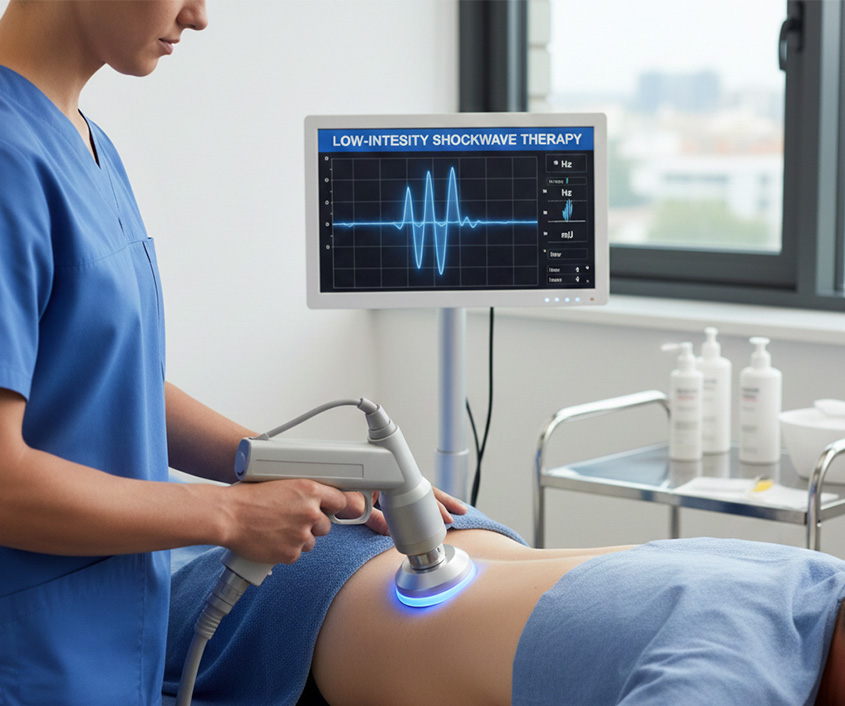
LI-SWT delivers controlled acoustic pulses to targeted penile tissue using a handheld probe. These low-energy waves create microtrauma that triggers the body’s natural healing cascade. The healing response encourages formation of new blood vessels and improves blood supply to erectile tissue.
The process of neovascularization strengthens small vessels and enhances oxygen and nutrient delivery. Over time, improved circulation helps the corpora cavernosa respond better during sexual stimulation. Because the therapy addresses vascular health, results are more than temporary symptom relief.
The treatment also stimulates local cell signaling and tissue repair mechanisms. These biological effects improve tissue health and may restore more natural erectile function. Repeated sessions create cumulative benefits rather than a single short-lived effect.
How LI-SWT Works?
A typical LI-SWT visit begins with a brief medical review and consent to confirm suitability and goals. The patient lies comfortably on an exam couch while a gel is applied to the penile skin to ensure good probe contact. The practitioner then places the probe on defined treatment points and delivers controlled pulses in a systematic pattern.
Each session usually lasts between 15 and 20 minutes depending on the protocol. Patients often feel light tapping or mild vibration but find the procedure well tolerated without anesthesia. Multiple sessions—commonly 6 visits spaced over weeks 3 are scheduled to achieve cumulative healing effects. Before starting, clinicians document baseline erectile function and discuss realistic expectations. Clear communication about the number of sessions, timing, and follow-up helps patients track progress.
Benefits of LI-SWT
LI-SWT is non-surgical and avoids the side effects associated with daily ED medication. It promotes natural improvement by repairing microvascular circulation rather than creating temporary erections. Many men prefer this approach because it reduces long-term dependence on drugs.
Sessions are short and require no recovery, allowing patients to return to normal activities immediately. The painless nature and outpatient setting make the therapy convenient for working individuals. Over several months, improvements may consolidate, offering durable benefits for some men.
Because it targets vascular causes, LI-SWT can complement other treatments when needed. Clinicians sometimes combine it with lifestyle measures or on-demand medication to enhance outcomes. This flexibility makes LI-SWT a useful component of a broader men’s sexual health plan.
Who are the Ideal Candidates?
LI-SWT works best for men with mild to moderate vasculogenic erectile dysfunction where blood flow limitations are the primary issue. Candidates who cannot tolerate ED medications or prefer to avoid surgery often choose this therapy. Healthy men with controlled chronic conditions typically respond better than those with severe systemic disease.
Men with severe nerve injury, advanced diabetes with neuropathy, or complex penile fibrosis may have limited benefit and may require affirmative treatment options. A medical evaluation, including history and basic tests, ensures safe selection and realistic expectations. Shared decision-making between patient and clinician defines candidacy and goals.
Lifestyle factors also influence suitability: smoking, uncontrolled diabetes, and severe cardiovascular disease reduce likelihood of success. Addressing modifiable risk factors alongside LI-SWT enhances the chance of meaningful improvement. Pre-treatment counseling clarifies these issues.
Safety & Side Effects
LI-SWT is generally safe when performed by trained clinicians using approved protocols and devices. Because it uses low-energy acoustic waves, the risk of tissue damage is minimal compared with high-energy modalities. Clinics screen patients for contraindications such as active infection, untreated bleeding disorders, or certain implanted devices.
Reported side effects are usually mild and transient, including slight redness, temporary tingling, or minor local discomfort. These effects typically resolve within hours to a day and require no special intervention. Serious adverse events are rare when standard infection control and treatment protocols are followed.
Clinicians provide clear safety instructions and monitor response during and after sessions. Any unexpected pain, swelling, or systemic symptoms should prompt immediate medical review. Proper patient selection and adherence to protocol minimize risks and support safe outcomes.
Results & Expectations
Patients often observe gradual improvement in erectile firmness and confidence after several sessions. Noticeable changes commonly appear within 4–12 weeks as neovascularization and tissue repair progress. Maximum benefit may require completion of the full treatment course and occasional maintenance or booster sessions.
Outcomes vary among individuals and depend on baseline health, severity of vascular impairment, and lifestyle factors. Some men achieve significant, lasting improvements; others see moderate gains that complement other therapies. Realistic counseling helps set expectations and avoids disappointment.
Aftercare & Follow-up
After each session, no special downtime is required; patients can resume daily activities immediately unless instructed otherwise. It advises avoiding vigorous sexual activity for a short initial period if local sensitivity occurs. Basic wound care is unnecessary because LI-SWT is non-invasive and does not break the skin.
Follow-up visits evaluate symptom change, side effects, and the need for booster sessions. Patients receive guidance on lifestyle measures—exercise, nutrition, smoking cessation, and glycemic control—to reinforce vascular health. Combining LI-SWT with risk-factor modification improves the durability of results.
If additional support is needed, clinicians may recommend adjudicative therapies such as on-demand medication or referral to a specialist for complex cases. Ongoing monitoring ensures safety and optimizes long-term outcomes for sexual health.
Summary
Low-Intensity Shockwave Therapy is a safe, non-invasive option that addresses vascular causes of erectile dysfunction by stimulating natural tissue repair and new vessel growth. It requires brief, repeated outpatient sessions and offers a drug-free route to improving penile blood flow and erectile function. Patient selection, realistic expectations, and lifestyle optimization are key to achieving meaningful results.
LI-SWT is best considered as part of a comprehensive men’s sexual health plan rather than a guaranteed cure. Clinicians evaluate each patient carefully to design a tailored treatment schedule and follow-up plan. When used appropriately, LI-SWT presents a modern, practical choice for men seeking lasting improvement without surgery.